Sunday, June 5, 2016

My stab at shabby

The before and after for the project in this post

Today, I'm writing about a lesser-known side of me. Those who are close to me know that I like to craft when I have time, which isn't often, and that I sometimes can see things in objects that others don't see. This usually leads to doubting looks from my husband when I suggest colors or decor for our renovation projects, since he can't see what isn't there yet. Happily, what I see is usually attainable and once there, he can appreciate what I had already known would be.

Which brings me to this blog post. I love to get bargains. Not clothes, not shoes, just stuff. I love nothing more than to find the exact piece I need for an area in my home at a resale shop, antique store, or estate sale. There are stores I shop specifically for the deep discounts on items with sluggish sales. I have a large piece of metal wall art that should have cost me $150 hanging on my wall, merrily reminded me that I only paid 3 bucks for it. This excites me. One of the finds I am excited about was the focus of a project this weekend. I converted a worn-out, neglected sideboard into a piece of furniture I've seen in upscale antique stores for $250 or more. It cost me a total of about $60. This post explains how I did that.

One of my favorite places to visit frequently is Goodwill. Lots of the furniture and decor in my house is from finds there. One day, I happened upon an antique sideboard there. It was so worn out and neglected. It had not been a high-dollar piece in its day, and the laminate on the wood was bubbled and peeling. One of the casters was broken. The finish was scratchy and sticky in places. It looked like someone had kept it on a porch for a long time. The tag said $25. I loaded it up and brought it home.

My husband gave me one of his doubting looks. I assured him it would be fine. This weekend I finally had time to work on it. Here is what I started with:

The sideboard as I purchased it at Goodwill

The inlays on the doors attracted me to the piece and I thought it would make a good project for me to learn how to do the shabby chic style that is so popular.

The first thing I had to do is remove all the hardware. I pulled the casters off and unscrewed the knobs. I also removed the doors and hinges.

Next, my plan was to pull all the laminate that was separating from the wood. The side (shown in the picture) was obviously needing this done. One of the drawers also had very loose laminate. I wasn't sure about the top or the doors - they each had some laminate that had come off, but it seemed like the rest of it was pretty firm. I thought maybe I'd leave them that way to add another dimension of weathering.

However, when I started working on the doors and the top, it became clear that the laminate was going to have to come off. I started searching the internet for the best way to do this and found a recommendation to use acetone to be the most likely. I ran to the store, bought acetone and got back to work.

Most of the laminate came off pretty easily. Unfortunately, the laminate on the doors was very stubborn. The inlays were a part of the laminate, so parts of them came off with the laminate. There was a lot of it that wouldn't budge, even when my hubby used an electric sander.
I really, really wanted this to be a one-day project, so I had to come up with a solution. I figured out that I could turn the doors inside out and put them on opposite sides so that I would have a smooth surface to work with. This leaves my doors looking like this inside of them, which means I will probably need to put decorative contact paper or some kind of fabric or even a laminate inside the doors before I'm completed finished with the project.

After I had removed the laminate, I sanded all of the surfaces. The paint I purchased to use for this project is chalk paint, which was a little expensive, but enabled me to paint directly on the finished surfaces without a lot of prep. The drawer I removed the laminate from still had streaks of laminate on them, but I decided they might add interest to the finished piece
After everything was sanded, it was time to start painting. The process I had decided to do called for two layers of paint. The first layer needs to be the color you hope will show through when you do the weathering. The second layer needs to be the primary color you want the piece to have.

My first coat was in a color called "Nana's Fudge." It is made by Little Billy Goat. It is important that you use some kind of chalk paint for a project like this, and I found Little Billy Goat paint to live up to its promise to paint on without much prep and also to cover up blemishes just due to its texture.


After a coat of "Nana's Fudge"
I noticed after the first coat that the area that had been exposed to weather on the side looked like it was darker. I decided this might also fit into the look I was going for. I only painted one coat of Nana's Fudge.

After that coat had dried, I added just a small amount of vaseline in areas I didn't want the next coat to stick to. This was mostly in light, streaking motions across the drawers, up the sides, and across the top. The idea behind this is that it would make the next layer easier to remove from those places.

Then it was time to do the second coat. This time, I used a color called Tablecloth, also by Little Billy Goat. At first, I was a little distressed that my brush seemed to have one stiff bristle which kept painting lines in this coat. However, after I did this for awhile, and made sure that the strokes went the length of the piece, I realized this was adding another, cool dimension to the paint.
"Weathering" on the top of the piece

"Weathering" on one of the drawers


After that coat had dried, I first took a scraper to the areas that I had put the vaseline, followed by a heavy sanding. The result was even better than I had planned. The fudge color showed through in a manner that looked very natural. I put a little more strength into the sanding along the edges and around the inlay on the top piece of the sideboard.

Lastly, I put reassembled the doors/hinges and added new knobs to the piece. I have to admit, I am not in love with the knobs I chose, but those are something I can easily change. 

Overall, I am very happy with the results. I had a piece that was dark, worn, and overbearing and now I have a piece that is light and comfortable in my bright front room. My family's doubting looks have turned to exclamations of "Wow, that actually looks good!" We will live with the piece for a few days before I apply the matte sealer (also from Little Billy Goat) to finish the project.

What do you think?
The finished piece


Wednesday, May 11, 2016

The power of a sign

The last time I was in the hospital with my sister, Bev, was a few months before she died. I had traveled up to see her because it was possible this would be my last chance. She was so weak and weighed only 98 pounds. She couldn't stay awake and when she was awake, she couldn't talk. We couldn't even tell whether she was aware we were there or if she could hear what we were saying.

She could. She let us know as soon as she was strong enough to talk.

One day, before her strength returned, I was standing beside her bed. I was the only one in the room with her and it was one of the moments she was awake-ish. I stood there, looking at her beautiful blue eyes and I just kept thinking her eyes had always been beautiful and still were. "Sweet Bevie," quietly issued from my mouth.

Her right hand, nearest me, lifted from the bed. She wasn't strong enough to raise it - the heel of her palm rested on the mattress. The rest of her hand signed "I love you,"

Today, I added this wind chime to the calm retreat my children created for me for Mother's Day. A beautiful reminder of my sweet sister and her ever present love.

Friday, April 8, 2016

Out There

I am a traveler. On a train called Society that moves me through Life. I was brought onto the train by my parents, who believed it was the safest place for me. As I grew, and tried to run off the train, or even change cars, they would catch me, like any good parent would do, and set me on the seat next to them, shielded from the view of what was “out there.”

When they couldn’t catch me anymore, I spent most of my time in the dining car, where I sat with others like me, peering out the window, talking about a someday when we would be “out there.”
When it came time for me to have children, though, I looked around the dining car and realized there were no families there, so I moved back to the travel car. With my babies on my lap, I pulled the shade on the windows so that the brightness of “out there” would not disturb them, and after a time, I forgot about the window.

One day I woke up from sleeping and remembered the window. I lifted the shade and was overcome. I saw things “out there” I had never noticed before. There were mountains in the distance, a forest past the field. Narrow and overgrown, but visible trails leading away from the tracks, platforms in the sky. The colors and the movement of air and trees were beautiful. I remembered my peers in the dining car and wondered why I never left the train.

I told my children the stories my friends and I used to tell about the great “out there” and they listened – their eyes lit with the excitement of possibility, adventure, and unknown. They scrambled out of my lap, running from window to window, peering out and seeing … but not knowing.

After a time, they came to me, one by one, and said they were moving to the dining car, then one day, they left the dining car and sat on a flat car with no walls or windows. Closing their eyes, feeling the rush of wind, and tossing their arms into the sky, reaching for something they did not know but that they knew was “out there.”

Once in awhile, I go sit on the flat car with them. Usually in the middle, because I miss the security of the enclosed car. They laugh and sing, and dance in the air, but none of us ever get off the train.

I dream of a day when they, or their children, or their children’s children, get off the train. “Out there”, they might be like me and remember the security of the traincar. They may build houses to live in the fields, rather than venturing into the woods, but they will be “out there.” With each generation, children will explore the pathways and one day, one of them will figure out the way to those platforms in the sky.

They will fly.

Tuesday, March 22, 2016

Water, water, everywhere . . .

I've been out of town on a business trip the last few days. I don't have traveling partners, so in the evenings, I'm finding things to do. There is an IMAX theater across the street located in a museum. They are currently showing, among other things, two shows that I was interested in - Grand Canyon and National Parks. I decided to buy a double-feature ticket and see both of them.

As I watched these documentaries, I found myself very emotional. Part of that emotion was because I feel guilty that my children have not seen the beautiful places I have seen. But part of that emotion was because I found myself wondering if they will ever be able to.

Nature, as many other things on our Earth, has become a commodity. 

I vividly remember one day in 1974 when I was just 9 years old, walking across the bridge that spans the Royal Gorge. It cost my parents $4 for our family to walk across the bridge and back. It was a lot of money to us, especially after my dad had just purchased, without really thinking, an original painting from a very-drunk artists selling his works on the side of the bridge. That vacation, we would barely make it home, literally on fumes and with one quarter remaining in my dad's wallet (enough, he said, for him to walk to a phone booth if we break down to call my granddad). I remember that day so vividly because of the emotion that was packed into it: emotion from fear of the artist who smelled of alcohol; confusion about my mother's stern face as my dad handed over money for the painting; joy at the beautiful sights and thrill of breathlessness as I gazed over the side of the bridge into the deep, deep divide; and a momentous occasion - the resignation of President Nixon, which we had pulled over to listen to on the radio on the way to the gorge.

Fast forward to today and you will see a very different view of the Royal Gorge if you venture there. A private company owns the lease to the land and has run a theme park on both sides of the bridge which requires a person to pay $25 or more just to get in so they can walk on the bridge. There are a couple of places a person who doesn't want to shell out the money can peer at the bridge from afar, but no longer can a family of six toddle their way across the bridge through their poverty.

The Grand Canyon documentary talked about our overuse of water and how it is affecting the Grand Canyon. While watching it, I kept remembering the same trip described above having a quick stop at the Grand Canyon, just at dusk, as we watched the sun set behind the unbelievable canyon. I also kept thinking about what I know about the truth of what is happening to the water in the Grand Canyon and in other places that have depended on the Colorado River over the ages.

The United States became dam happy in the early 20th century, placing hundreds of dams across the country in the name of providing reservoirs of water for areas that had low water supplies. This damming of nature resulted in our neighbors to the south experiencing extreme drought and areas that relied on fishing for their livelihood could not only no longer fish, they also had no drinking water. Some of the dams in the southwest also destroyed history and removed evidence of ancient culture, as ruins and artifacts succumbed to the sudden onslaught of water.

Creation was made in a way that ensured it would always be here. Nature has its own ways of renewing materials and evolving to suit climate change. When we have decided to change those processes, we have chosen to eliminate nature and heritage, and shorten our future.

The real issue, though, is that the general public are either blissfully unaware or intentionally disregarding these truths.


As a society, we don't always choose to be unaware, we have been coerced into it. We blindly allow environmentally-damaging practices to continue and we choose to continue them ourselves.

Nature had a way of ensuring that the salmon population in Alaska would forever provide food to its inhabitants, but we have systematically removed salmon habitat over the last 100 years. The water cycle promises us that we will never run out of water, but we have built dams and processing plants that forever remove water from that cycle in parts of the country that previously had plenty. Why haven't we done as native ancestors did and built along waterways or maintained a nomadic life, following the flow of water or the changing of seasons? Why have we decided that because we can build systems that allow us to live in the desert that we should, in fact, do so?

When this is all gone, will we even wonder if we were responsible?

It isn't too late to do something about it. Dams can be removed. We can choose to live in ways that are friendlier to our environment. We can decide that we will no longer build in harms way but rather in ways that are harmonious with our Earth.

Wake up. See the water leaving us. Lament the loss of wildlife and habitat.  Do just one thing toward ensuring that our descendants will still have nature left to enjoy, and don't have to rely on a movie screen to reveal what once was . . .

Friday, December 4, 2015

First Christmas

She's here. In the memories the ticking clock on my mantle recall. In the falling leaves that pile in my mind, waiting for our feet to pounce on them. As I walk through my new house, describing to her everything I plan to do. Sisters, sharing our lives together.

Except she isn't here. I don't hear her laughter or her voice saying "Laney". I don't see her hand with index and pinky finger outstretched, silently acknowledging her love for me. I don't see her in the kitchen, happily preparing Christmas yumminess.

A sister, cherished memories, and sadly missed.

Saturday, September 12, 2015

If only we had wings

I was sitting at a stoplight on my drive to work one day this week and I noticed something. It was one of those lights that takes an unusual amount of time to change, so I was watching two very small birds navigate the long, gray pole hanging over the lane. One bird ran without hesitation to the end of the pole and stopped. The second bird was more hesitant. It ran a few steps then stopped and looked around, ran a few more, stopped a little longer. When the second bird found itself behind a sign that was attached to the pole, it hopped up to the top of the sign and perched itself on the thin metal.

I was a little surprised by the choice the bird had made. While it had been hesitant to run along the pole, which was quite wide from its perspective as a tiny being, it seemingly had no concerns about jumping and perching on a much thinner support. Why, I wondered, was it not afraid of that slender sign.

My morning brain came a little out of its fog and thought, duh ... it has wings! What would happen if it miscalculated the hop? It would have to fly a bit. No biggie.

The light turned green and I continued thinking about the bird. When we are very young, we approach our world like that bird does. We don't know anything about gravity. We haven't learned that it might be dangerous to run along that fencepost. We are daring, perhaps fearless, in our exploration of the world.

Then something happens.

We find out that we don't have wings and the superhero cape attached to our shoulders with safety pins hold only the love with which our mothers or fathers placed them there. Our balance falters. Knees get skinned. Salty tears wash the dirt from our cheeks.

We learn that we have limits.

That bird I saw is one of the least intelligent organisms on the planet. Its brain is so tiny, once it has directed the bird's heart to beat, lungs to breathe, wings to flap, and metabolic processes to occur, the only thoughts that could possibly run through it is to eat and to reproduce. Why, then, does this little creature get wings while human beings, who have such a capacity for thought and learning that we have not even begun to use our entire brain, get wobbly legs and frequent injury?

But what if we did have wings? What would be our limit? Where would we go? What would we do? Would we be as sedentary as we are? Would we spend our free time joyfully flying, free to explore wherever we wished to go? Would we take more risks?

I'm not sure the answer is yes. Because the real truth is that we have been made with beautiful and miraculous capabilities, yet we squander them. We let our knowledge of gravity and our experiences of hurt and discomfort keep us from pursuing what is "thin". We go for the "thick things" - eating, sleeping, entertainment, watching TV, and shopping. We avoid the exposure we may experience by pursuing the "thin" - knowledge, exploration, exercise, and love.

If only we could see our wings.

Thursday, September 3, 2015

Forever changed

"I'm so sorry."

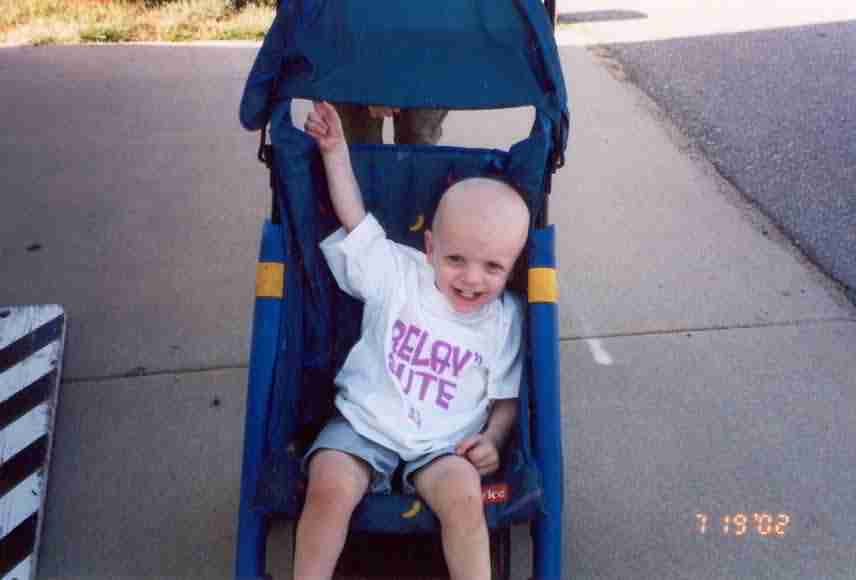
The words coming out of the surgeon's mouth three hours after my infant son went in for a surgery that was supposed to last less than an hour struck me as you would imagine. The next words would change me forever,


"It's cancer."


His apologies were not about my son having cancer, but rather about him assuring me days earlier that I shouldn't worry. That the likelihood of him having cancer was so rare, it wasn't even something to concern myself about.


The next two weeks are a blur. There are memories of dark hospital rooms before being moved to a pediatric oncology unit. There are memories of well-meaning friends and family saying all the wrong things. Memories of his oncologist telling me how to prepare myself for what was to come. 


I do remember, vividly, a conversation with the surgeon the day after the surgery. "We haven't gotten the results back from the lab, but the chances this is rhabdomyosarcoma is so rare, I am sure that isn't it."


And the visit the next day from the oncologist, "it's alveolar rhabdomyosarcoma." In those two days, I had the time to read the information packets the hospital had given me and I knew this was one of the worst pieces of news I could get, but I had already prepared myself for that being the news I would get.


The first day we returned home is still surreal to me. I can remember driving into my driveway, getting the kids out, walking to the porch and thinking. "Oncologist". "Oncologist". "Oncologist."


The sound of the word became very odd to me. "Your son has cancer" began repeating in my head.


"This is the home where your child has cancer." This thought stopped me in my tracks. I didn't want to go in. I was fearful that walking into that house would acknowledge or in some way make true that my son was entering into a fight for his life.


While you have been reading this, a family has been changed with a diagnosis. One out of 285 children will be diagnosed with cancer. Of those, one in five will not survive. Those who do survive often deal with long-term effects, hassles with insurance companies, and an always-present, heightened sense of awareness of changes in their body. For the families of all of the children fortunate not to go through this, it is hard to imagine the reality of childhood cancer. Please seek to learn more about childhood cancer and what you can do to support the research that can help to keep families from being forever changed.